Intro to Selling Online
Trainer: Saily M Gutierrez
Make money while decluttering with online marketplaces!With online scams on the rise, it’s important to understand the different types of digital fraud and what to watch out for. Explore these resources to learn more and prepare yourself to stop scams before they start.
Online Classes · Is It a Scam? · Quiz · How to Stay Safe · Types of Scams · Articles · Resources
Trainer: Saily M Gutierrez
Make money while decluttering with online marketplaces!
Trainer: Saily M Gutierrez
Tired of resetting your password all the time? Join this lecture to discover password alternatives and different ways to manage your passwords.
Trainer: Saily M Gutierrez
From splitting the bill at dinner to sending a friend money, learn what payment apps can do for you.
Trainer: Zeke Tijerina
Registration required.
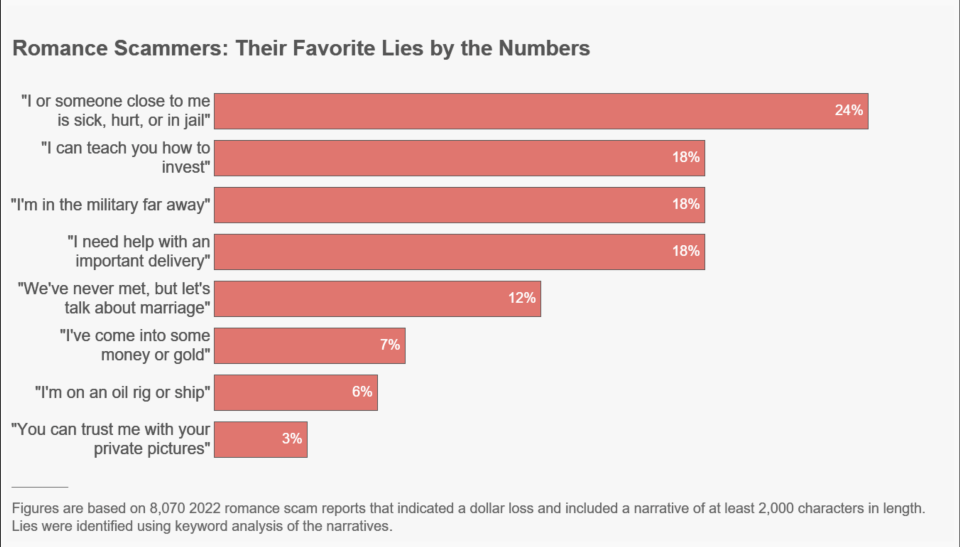
Discover what you can do with online and mobile banking!Romance scams can target anyone, but older adults and socially isolated individuals are especially susceptible. These scams often start online or with a text message. It’s a long game, because the scammer wants to build trust.

Image from ftc.gov
Employment ScamsEmployment scams target job seekers. These scams often place fake job descriptions online. Remember: if it sounds too good to be true, it probably is!
Investment scams can target anyone, but individuals who are less tech-savvy or uninformed about fintech may be more susceptible. These scams often involve cryptocurrency. Financial grooming, sometimes called “pig butchering” is an example.

IRS scams can target anyone, but individuals who are socially isolated are at greater risk. Scammers will send texts, emails, and make phone calls saying that back taxes are owed. The IRS will send a first communication through the mail. You can always verify if the letter is legitimate by searching the number that appears on the top, right corner of the letter on IRS.gov. The IRS will only ever email, text, or call you if you’ve given them permission to do so and you’ve already been in touch with them about a case/issue.

Tech Support ScamsTech support scams can target anyone, but older adults who aren’t tech-savvy are more susceptible to fall for these scams. Look out for these types of notifications:
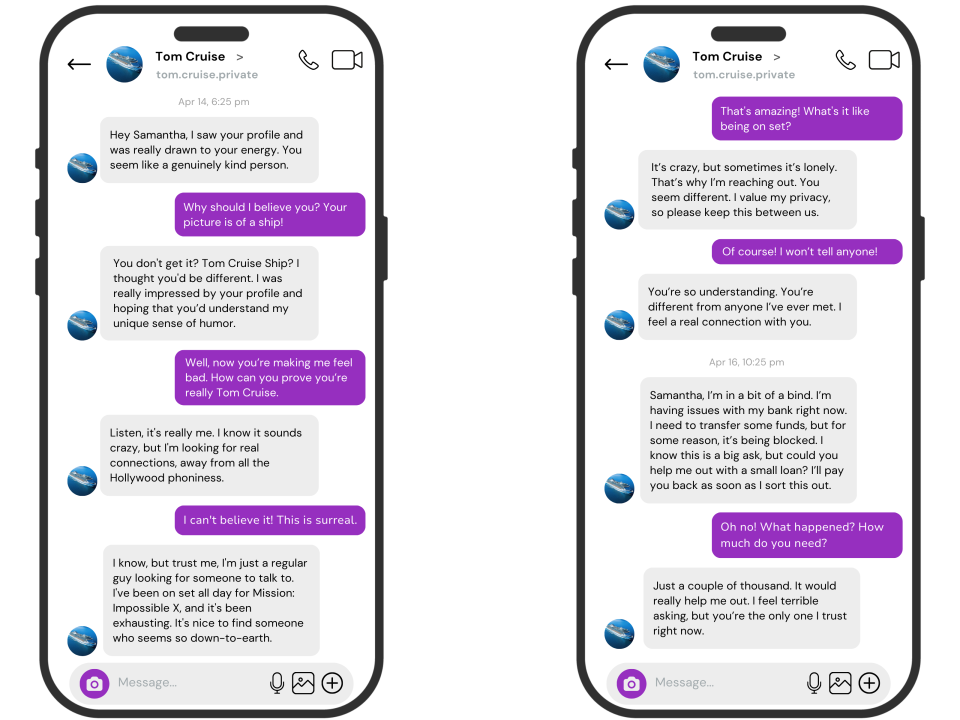
Celebrity impostor scams can target anyone, but individuals who are socially isolated and/or not tech-savvy are at greater risk. There are two main types of impostor scams:

The above conversation is entirely fictional and for educational purposes only.
Threats and Extortion ScamsThreats and extortions can target anyone, but individuals who are less tech-savvy or socially isolated are more susceptible to fall for these scams. Scammers often send texts or emails that are threatening in nature. These messages can be scary, but are generally phishing expeditions. Scammers try to get you into a heightened emotional state so that you respond.